
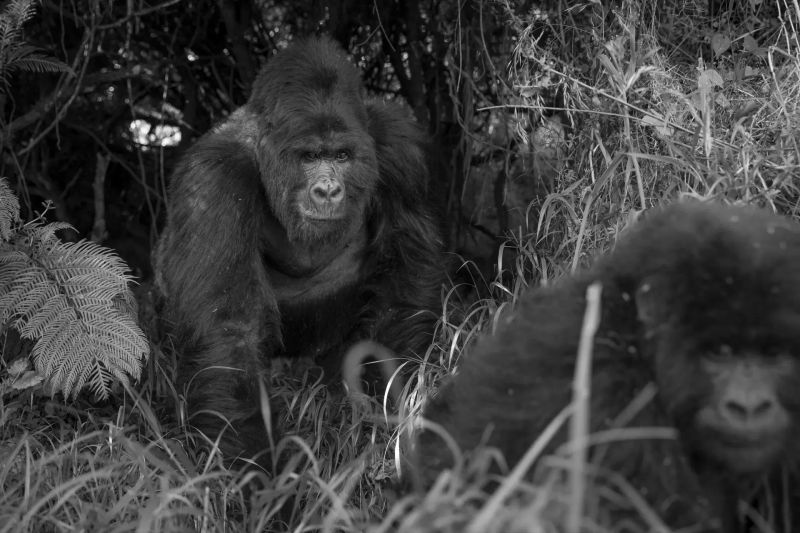
The official rule is 7 meters (23 feet) from mountain gorillas, but gorillas often approach closer. Learn the distance rules, safety protocols, and what to do if a gorilla approaches you.
One of the most common questions from first-time gorilla trekkers is: “How close will I get to the gorillas?”
The official answer from Uganda Wildlife Authority is 7 meters (approximately 23 feet). This is the minimum distance humans must maintain from mountain gorillas to protect both the animals and visitors.
However, the reality is often quite different and even more thrilling. Gorillas don’t understand or follow human rules, and they frequently approach much closer than 7 meters. Here’s everything you need to know about proximity rules, safety protocols, and what happens when a 200kg silverback decides to walk right past you.
The Official 7-Meter Rule
Why 7 meters?
This distance was established based on scientific research to:
- Prevent disease transmission – Gorillas share 98.3% of human DNA and are highly susceptible to human diseases
- Reduce stress on gorillas – Too-close human presence can disturb natural behaviors
- Ensure visitor safety – Provides reaction time if a gorilla feels threatened
- Protect habituated families – Maintains the semi-wild nature of gorilla groups
Who must maintain 7 meters?
- Humans must stay 7 meters from gorillas
- Gorillas can approach as close as they want
- You must move back if a gorilla approaches within 7 meters
This creates an interesting dynamic: you’re responsible for maintaining distance, but gorillas often have other ideas.
What Really Happens: Gorillas Don’t Follow Rules
In practice, gorillas frequently come much closer than 7 meters, and when they do, you’re instructed to:
- Stay calm and still
- Avoid direct eye contact
- Slowly move back if possible
- Follow your guide’s instructions
- Never touch the gorillas
Common scenarios:
Scenario 1: Gorilla crosses your path
- A gorilla may walk within 1-2 meters of you
- You remain still and let them pass
- This happens frequently and is completely normal
Scenario 2: Curious juvenile approaches
- Young gorillas are naturally curious about visitors
- They may come within arm’s reach
- Mothers or silverbacks usually call them back
- You stay still and avoid interaction
Scenario 3: Silverback displays dominance
- The silverback may approach to assert authority
- He might chest-beat or make vocalizations nearby
- You remain submissive (crouch, look down, stay still)
- This is normal behavior, not aggression
Scenario 4: Gorilla sits or feeds next to you
- Sometimes gorillas simply choose to sit or eat very close to visitors
- You remain still and enjoy the incredible proximity
- Guides will quietly reposition the group if needed
How Close Do Gorillas Actually Get?
Based on thousands of trek reports:
- 50% of treks: Gorillas come within 3-5 meters
- 30% of treks: Gorillas come within 1-3 meters
- 15% of treks: Gorillas come within arm’s reach (less than 1 meter)
- 5% of treks: Gorillas make physical contact (touch, brush past)
Important: These close encounters are initiated by the gorillas, not humans. Visitors must never approach gorillas or attempt to touch them.
What If a Gorilla Touches You?
While rare, gorillas occasionally make physical contact with visitors:
What might happen:
- A juvenile might grab your leg or backpack
- A gorilla might brush against you while passing
- A baby might climb on you (extremely rare)
- A gorilla might touch your camera or clothing
What you should do:
- Remain calm – Don’t pull away suddenly
- Don’t touch back – Keep hands to yourself
- Stay still – Let the gorilla move away on their own
- Follow guide instructions – They’ll manage the situation
- Don’t scream or make sudden movements
What happens after:
- Nothing negative usually occurs
- It’s considered a special, memorable moment
- Guides will gently discourage the gorilla if needed
- You continue your visit normally
Important note: While these moments are magical, they’re not encouraged. The goal is to observe gorillas without interaction to maintain their wild nature.
Safety Protocols: Understanding Gorilla Behavior
Non-threatening behaviors (common):
- Feeding peacefully
- Grooming each other
- Playing (juveniles)
- Resting or sleeping
- Moving slowly through the forest
- Vocalizing softly
Warning behaviors (less common):
- Direct, prolonged staring
- Chest-beating
- Charging (usually a bluff)
- Loud vocalizations
- Breaking branches
- Standing upright
How to respond to warning behaviors:
- Stay calm – Don’t run (you can’t outrun a gorilla anyway)
- Crouch down – Make yourself smaller and submissive
- Look down – Avoid eye contact
- Stay still – Don’t make sudden movements
- Follow guide instructions – They’re trained for these situations
Important: Aggressive behavior is extremely rare with habituated gorilla families. Charges are almost always bluff charges meant to assert dominance, not actual attacks.
Has Anyone Been Attacked by Gorillas?
Attacks on tourists are extraordinarily rare. In over 30 years of gorilla tourism in Uganda:
- No tourist fatalities from gorilla attacks
- Serious injuries are extremely uncommon
- Minor incidents (scratches, pushes) occur occasionally
- Most “incidents” are misunderstandings of normal gorilla behavior
Why gorillas rarely attack tourists:
- Habituated families are accustomed to human presence
- Gorillas are generally peaceful and non-aggressive
- Guides are trained to read gorilla behavior
- Strict rules minimize stress on gorillas
- Groups are kept small (max 8 people)
When incidents occur, they’re usually because:
- A visitor violated rules (got too close, used flash, made sudden movements)
- A gorilla felt threatened or protective
- Misunderstanding of gorilla communication
Photography at Close Range
Rules for photography:
- No flash photography – Can startle and anger gorillas
- No camera sounds – Turn off beeps and shutter sounds
- Slow movements – Don’t make sudden gestures
- Respect the 7-meter rule – Don’t approach for better shots
- Follow guide instructions – They’ll position you safely
Best practices:
- Use a zoom lens (70-200mm or 100-400mm ideal)
- Higher ISO settings (800-1600) for low light
- Continuous shooting mode for action shots
- Be ready gorillas move unpredictably
- Sometimes put the camera down and just observe
When gorillas are very close:
- Wide-angle lens (24-70mm) captures the scene
- You might be too close for your zoom lens
- Focus on the experience, not just photos
- Quick shots, then put camera down
Special Considerations for Close Encounters
If you’re sick:
- Do not trek – Even a cold can be deadly to gorillas
- Inform your guide immediately
- Permits may be rescheduled with medical documentation
- This protects the entire gorilla population
If you need to cough or sneeze:
- Turn away from gorillas
- Cover your mouth and nose
- Use the inside of your elbow, not your hands
- Sanitize hands afterward
If you need to use the bathroom:
- Inform your guide immediately
- They’ll dig a hole at least 300 meters from gorillas
- Bury all waste completely
- This prevents disease transmission
The Gorilla Habituation Experience: Even Closer Encounters
For those wanting potentially closer, longer encounters, consider the Gorilla Habituation Experience (available only in Rushaga sector, Bwindi):
Differences from regular trekking:
- 4 hours with gorillas (vs. 1 hour)
- Semi-habituated families (still getting used to humans)
- Smaller groups (max 4 visitors vs. 8)
- More active gorillas (less accustomed to sitting still near humans)
- Higher cost ($1,500 vs. $800)
Proximity considerations:
- Gorillas may be more unpredictable
- Closer encounters are common
- More movement and activity
- Researchers and trackers accompany you
What Guides Do to Manage Distance
Your guides are highly trained in gorilla behavior:
Before the encounter:
- Brief you on rules and protocols
- Explain gorilla body language
- Demonstrate proper responses
- Answer questions about safety
During the encounter:
- Position the group strategically
- Read gorilla moods and intentions
- Communicate with trackers via radio
- Gently redirect gorillas if needed (using vocalizations)
- Ensure all visitors follow rules
If a gorilla approaches:
- Guides use soft vocalizations to communicate
- They may create space by moving the group
- They assess the gorilla’s intentions
- They keep visitors calm and informed
Respecting the 7-Meter Rule: Why It Matters
Even though gorillas often come closer, visitors must always attempt to maintain 7 meters:
For gorilla health:
- Human diseases (COVID, flu, colds) can be fatal to gorillas
- Respiratory infections spread easily
- Gorillas have no immunity to many human pathogens
- One sick tourist could endanger an entire family
For gorilla conservation:
- Over-habituation makes gorillas vulnerable to poachers
- Maintaining some wildness is essential
- Gorillas should remain wary of unknown humans
- Tourism must be sustainable long-term
For visitor safety:
- Gorillas are wild animals, not pets
- A 200kg silverback is incredibly powerful
- Maintaining distance provides reaction time
- Reduces risk of misunderstandings
What to Expect: Realistic Proximity Scenarios
Most likely scenario (60% of treks):
- You maintain 5-7 meters most of the time
- Gorillas occasionally come within 3-5 meters
- You get excellent views and photos
- The experience feels intimate but safe
Close encounter scenario (30% of treks):
- Gorillas come within 1-3 meters multiple times
- You might have a gorilla walk right past you
- Juveniles might approach out of curiosity
- You feel incredibly connected to the family
Ultra-close scenario (10% of treks):
- Gorillas come within arm’s reach
- Physical contact might occur
- A gorilla might sit or feed right next to you
- You have a once-in-a-lifetime, breathtaking experience
Remember: You cannot predict or control how close gorillas will come. Every trek is unique, and proximity varies based on the gorilla family’s mood, activities, and individual personalities.
Final Thoughts: The Magic of Proximity
The 7-meter rule exists for important reasons, but the reality of gorilla trekking often brings you much closer to these magnificent creatures than you ever imagined. The key is to:
- Respect the rules – Always try to maintain distance
- Stay calm – Let gorillas approach on their terms
- Follow guide instructions – They know gorilla behavior
- Cherish the moment – Whether 7 meters or 1 meter, it’s extraordinary
The proximity you experience with mountain gorillas whether it’s a respectful 7 meters or a heart-stopping arm’s length will be one of the most profound wildlife encounters of your life.
Ready for Your Close Encounter?
Still Wild Safaris ensures all our clients are thoroughly prepared for gorilla trekking, including understanding proximity rules, safety protocols, and gorilla behavior. We’ll help you have a safe, respectful, and unforgettable encounter.
Frequently Asked Questions
Q: Can I touch a gorilla if it touches me first? A: No. Even if a gorilla touches you, you should never touch back. Keep your hands to yourself at all times.
Q: What if a baby gorilla climbs on me? A: Remain still and calm. The mother or silverback will usually call the baby back. Your guide will manage the situation.
Q: Is it safe to be so close to a 200kg silverback? A: Yes, when following rules and guide instructions. Habituated silverbacks are accustomed to human